Claire Cox, curate in Old Swinford, and soon to be Vicar of Pedmore and Wollescote, has recently gone through selection to become a Royal Army Chaplain in the Reserve Department.
Claire attended an ‘Explore Army Chaplaincy’ course in 2024, which was a mixture of lectures, visits, and interaction with serving chaplains and soldiers. She said: “We are encouraged to try things during our curacy which are outside of our existing experience, things which we might not have considered before. At that stage I didn’t see myself as an Army Chaplain, but it was really interesting to spend a week in barracks - there was plenty of time for discussion as well as quiet contemplation. Everyone was really lovely and it was great to see all faiths represented.”
Following the course, Claire was introduced to her local Army reserve centre, which is a short walk from her curacy parish of St Mary’s in Old Swinford, Stourbridge. This centre houses the 6th Military Intelligence Battalion (6MI), specifically 63 Military Intelligence Company, which provides military intelligence support and conducts training on military and intelligence skills.
Claire continued: “Although I wasn’t sure if I was fit enough to do it, I decided I’d apply to be a reserve chaplain. The fitness targets were going to be challenging. I always hated sport at school, but I began running – at the start it took me 22 minutes to run 2.4km. I’m now running three times a week and can do 2.4km in 11 minutes!”
Claire needed to be 79kg, be able to do a mid-thigh pull of 76kg, throw a medicine ball 3.1m and achieve level 4.2 on the multistage fitness test (bleep test). She began by trying to reach a target of 6 press ups and 20 sit ups alongside running 2.4km in 16.3 minutes.
In November 2024 Claire attended an Officer Familiarisation Visit. “The purpose of the visit is for both sides to get to know each other – for me to decide if Chaplaincy was right for me and for the Army to decide if I was right to be a Chaplain! I was interviewed by an Archdeacon, also met the Chaplain General, and had the opportunity to ask lots of questions. I happened to be there for Remembrance Sunday which was extremely moving.”
Once Claire decided she wanted to continue, she had to go through an in-depth medical assessment. “You don’t have to have a perfect bill of health, but they go through all your records and there are lots of different tests. I was told that my lungs were the best thing about me!”
The selection process to become a chaplain also involves an endorsement by an Endorsing Authority representing your belief or faith community. For Claire this involved an interview with a representative from the Bishop to the Armed Forces' team within the Church of England where they decide if they are willing to endorse the application. To add to this Claire had to provide referees who each wrote a detailed report on her character, her ability to inspire others, her work ethic and much more - without these the application could not continue.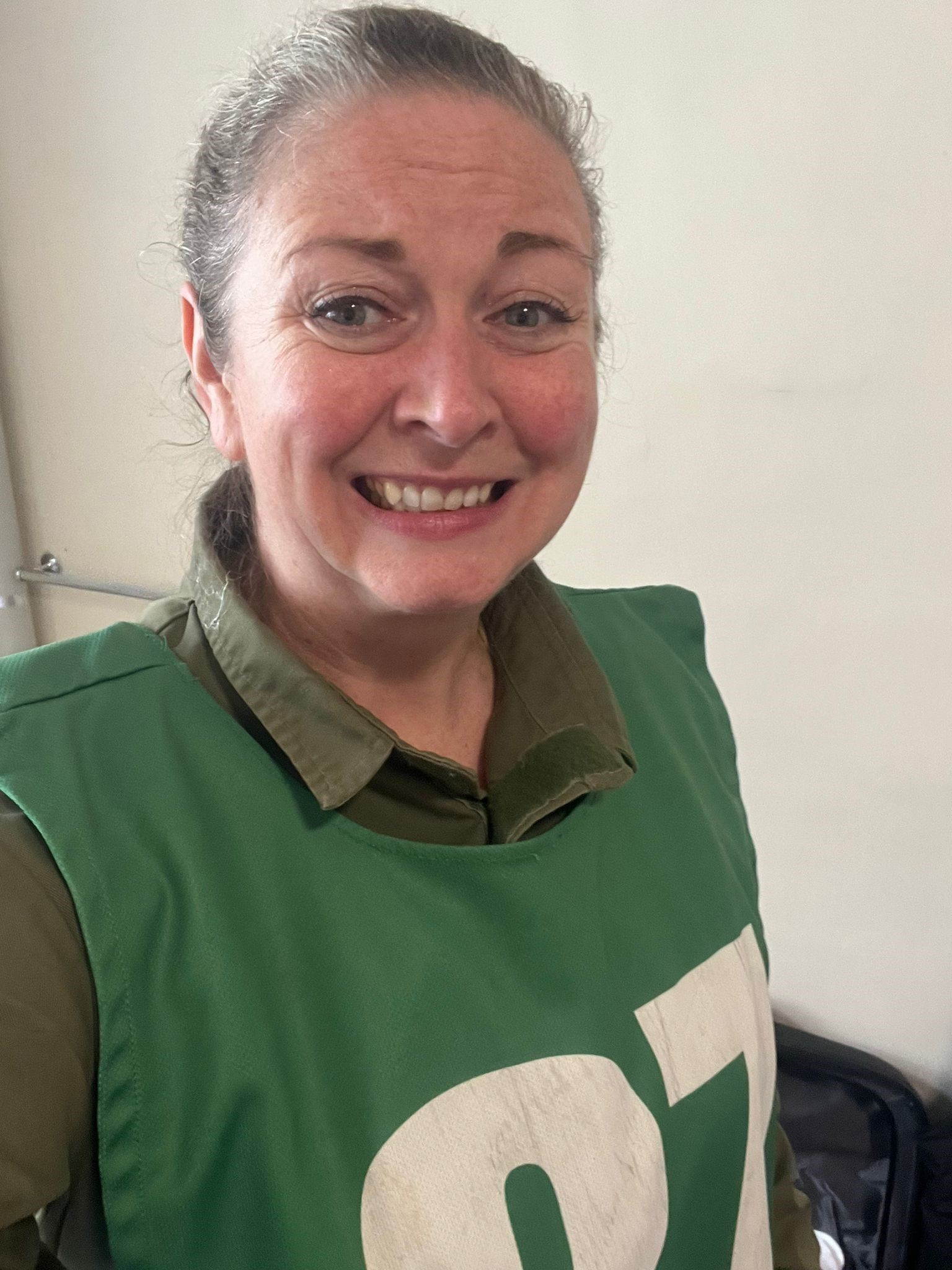
In October 2025, Claire attended an Army Officer Selection Board, which is the British Army's assessment process for all candidates seeking to become officers. It evaluates leadership, character, and potential through a combination of physical and aptitude tests, group exercises, and interviews.
“This was brutal!” Said Claire. “We were given a number and marched everywhere! We were moved quickly from physical exercises to other tests with no time to wash in between and were questioned under pressure to see how we would respond in different situations. There were seven people in our group, and we made quite a close connection over the three days. They weren’t all potential chaplains, but included physiotherapists, mental health nurses and radiologists, some of whom had much harder physical targets than us chaplains. I was relieved to get through it.”
Now Claire has been accepted as a Reserve Chaplain, she will be assigned to a company and will be commissioned. She will have initial training at the Armed Forces Chaplaincy Centre in Shrivenham and will also need to complete a short course at the Royal Military Academy, Sandhurst, which is designed to familiarise new recruits with military life and provide training in leadership and being an officer.
“I am really excited to get started. I already feel part of the community of my local reserve centre and I’m sure I’ll soon build relationships with whichever centre I’m assigned to. It will be a real adventure and an absolute privilege to serve soldiers and their families in this way, whatever their faith. I would really encourage others to go on the ‘Explore Chaplaincy’ course which takes place each Autumn. There lots of vacancies across all the different sections and I think my parish ministry will be fed by my chaplaincy and vice versa.”